Your Brain is Designed to Keep You Safe, Not Happy
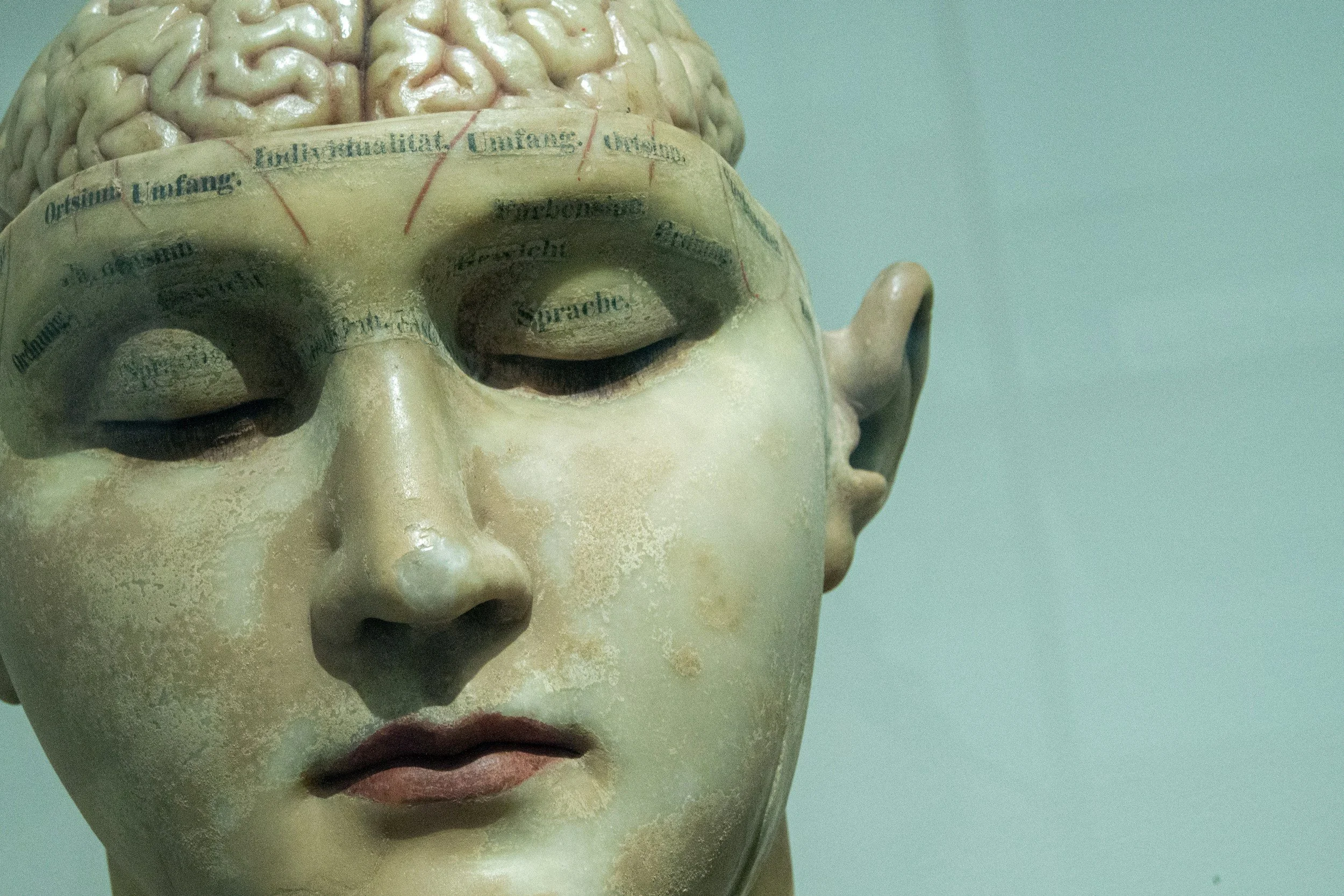
Did you know that Your Brain Is Designed to Protect Your Survival, Not Keep you Happy or Transform Your Life?
Your brain has one primary responsibility: to protect your survival. Not to make you happy. Not to help you achieve your goals. Not even to help you become the person you're capable of becoming. Its first priority is to keep you safe. Thousands of years ago, that meant helping us recognize physical danger and respond quickly enough to stay alive. Today, our world looks very different, but our nervous system hasn't evolved nearly as quickly. While we're no longer running from predators, our brains still respond to anything they perceive as a threat. Chronic stress. Uncertainty. Loss. Overwhelm. Conflict. Even the possibility of change itself. From the brain's perspective, familiar is often safer than unfamiliar, even when what's familiar is no longer serving us. This is one of the reasons so many intelligent, motivated people feel stuck despite doing everything "right." They've read the books. They've listened to the podcasts. They've hired the coach. They've started the meditation practice, the morning routine, the gratitude journal, and the vision board. Yet somehow, the change they're working so hard to create never seems to fully take hold. It isn't because they aren't trying hard enough. More often than not, it's because they're trying to create change with a nervous system that's still focused on protection.
Protection Isn't the Problem
One of the biggest misconceptions I encounter is the belief that feeling stuck means something is wrong with you. I see it differently. Our minds and bodies are remarkably intelligent. When your nervous system senses danger—whether it's physical, emotional, or simply the accumulation of years of chronic stress—it adapts. Sometimes that adaptation looks like perfectionism. Sometimes it looks like procrastination. Sometimes it's people-pleasing, overworking, shutting down, constantly staying busy, or struggling to make decisions. These aren't necessarily character flaws. Very often, they're protective strategies. Strategies that may have once helped you navigate difficult circumstances. Strategies your nervous system simply hasn't realized you no longer need.
Why Willpower Isn't Enough
We often believe that if we could just become more disciplined, more motivated, or more positive, everything would finally change. But willpower has limits. If one part of your brain is trying to move toward a goal while another part believes that goal threatens your sense of safety, the protective part usually wins. Not because it's stronger. Because that's the job it was designed to do. Imagine trying to drive a car with one foot pressing the accelerator while the other is firmly planted on the brake. You can certainly move forward. But it takes tremendous effort. Eventually, you begin to wonder whether the problem is the car. The real issue isn't the car. It's the brake.
Creating Space for Change
Of all the practices I've learned over the past 30 years, meditation is the one I return to again and again. It has truly changed my life.
Whenever I notice myself feeling overwhelmed, frustrated, anxious, or emotionally off balance, I don't see meditation as another item on my to-do list, I see it as a place to come home to myself. More often than not, you'll find me making my way to my meditation cushion before I do anything else.
Meditation isn't about emptying your mind or stopping your thoughts. It's simply the practice of bringing your attention back to the present moment, again and again.
Over time, something remarkable begins to happen. You naturally create more space between your thoughts. Instead of being swept away by every emotion, worry, or reaction, you begin to notice them. And in that moment of noticing, you discover something incredibly powerful: the ability to choose.
That space allows you to respond with greater intention instead of reacting automatically. It gives you the opportunity to choose your next thought, your next word, and your next action rather than allowing old patterns to make those decisions for you.
When our nervous system is under stress, that space often disappears. Our thoughts race, our emotions become more reactive, and we find ourselves repeating familiar patterns without even realizing it. Meditation gently helps restore that space, allowing the nervous system to settle and making it easier to access clarity, presence, and choice.
The goal isn't perfection. It's presence.
Every moment of awareness creates a little more space between stimulus and response, between what happens to us and how we choose to think, speak, and act. It is within that space that new possibilities emerge, wiser decisions are made, and lasting transformation begins.
The following walking meditation is one simple practice that can help cultivate that space.
Experience It Yourself: A Walking Meditation to Support Your Nervous System
Try this simple five-minute walking meditation the next time you notice yourself feeling overwhelmed, anxious, or mentally "stuck." As you walk, silently repeat the sounds Sa – Ta – Na – Ma, touching your thumb to a different fingertip with each sound:
Sa – thumb to index finger
Ta – thumb to middle finger
Na – thumb to ring finger
Ma – thumb to little finger
In the Kundalini tradition, these sounds represent the natural cycle of life: beginning, life, transformation, and renewal. For the first two to three minutes, repeat the sequence each time your left foot touches the ground. Then switch, repeating the same sequence for another two to three minutes each time your right foot touches the ground. Allow your breathing to remain natural and simply notice the rhythm of your steps, your fingers, and the sounds. When you're finished, pause for a moment and notice how you feel. Rather than trying to force yourself into a different state, you've simply given your nervous system an opportunity to slow down and reconnect with the present moment.
Before you move on with your day, take a moment to reflect on your experience. What felt different about this walk? Did you notice things around you that you might have otherwise overlooked? Did you feel more present with each step? Did your mind become a little quieter, or did you simply become more aware of your thoughts without getting carried away by them? There are no right or wrong answers. The goal isn't to have a perfect meditation. It's simply to notice. Because the more we practice noticing, the more present we become. And the more present we become, the more freedom we have to choose our next thought, our next word, and our next action with intention instead of habit.